Lesson 8C - The Building BLOCKS (Pt 3)
Block to Page Connections
On Page 页面上三种链接方式
- A Block is referenced and becomes part of a paragraph in an Output Page 一个区块被引用并成为输出页面中段落的一部分 #card
- Example: This Block only appears ON the page in a Summary/Detail or Output Page. This is an example of a block like this. Because it is an example, it serves an important purpose to this page.
- A journal response Block on your DNP #card
- A Block is referenced and becomes part of a paragraph in an Output Page 一个区块被引用并成为输出页面中段落的一部分 #card
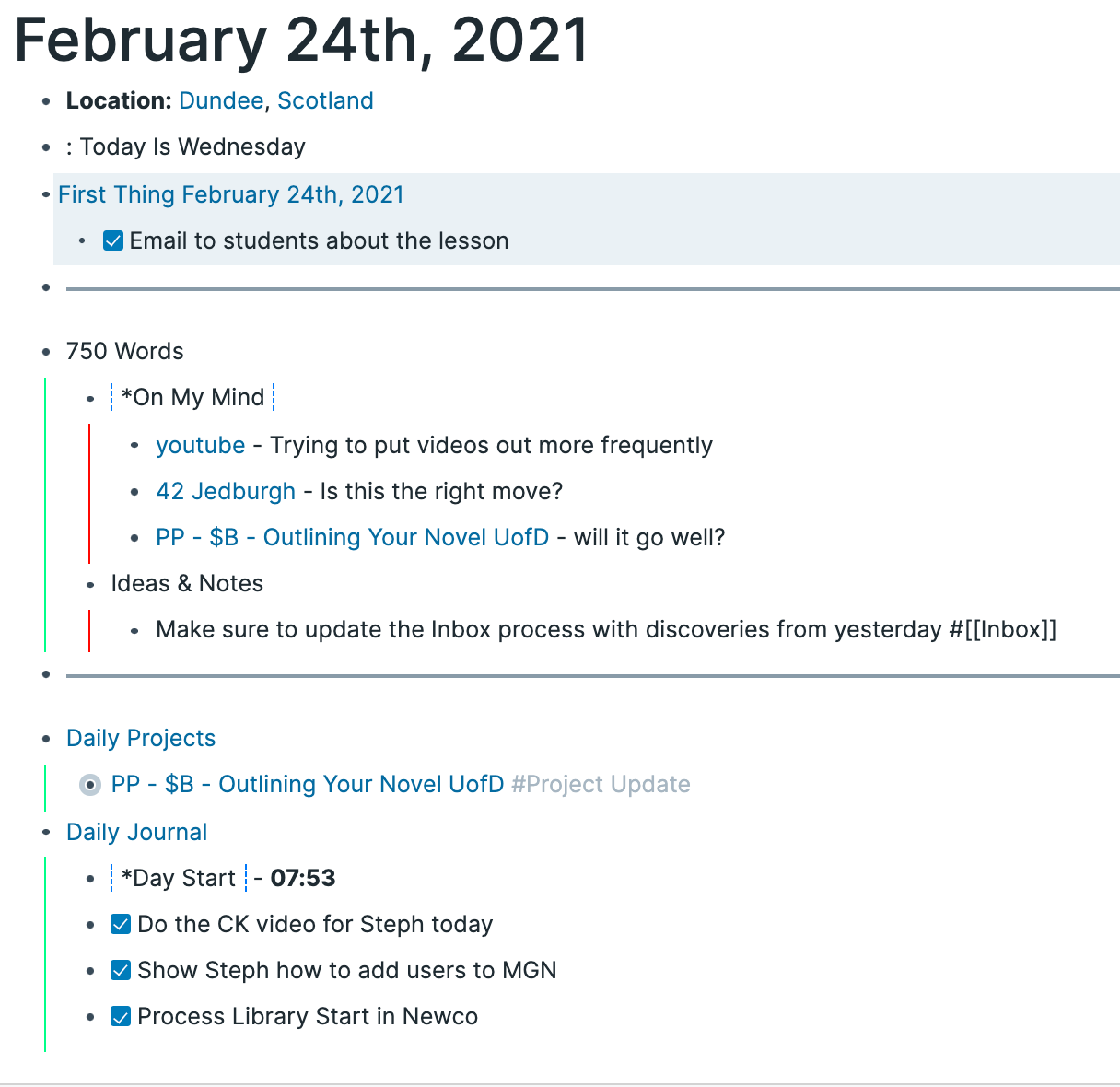
+ A Block is a note from a specific source and it lives on your Source Page #card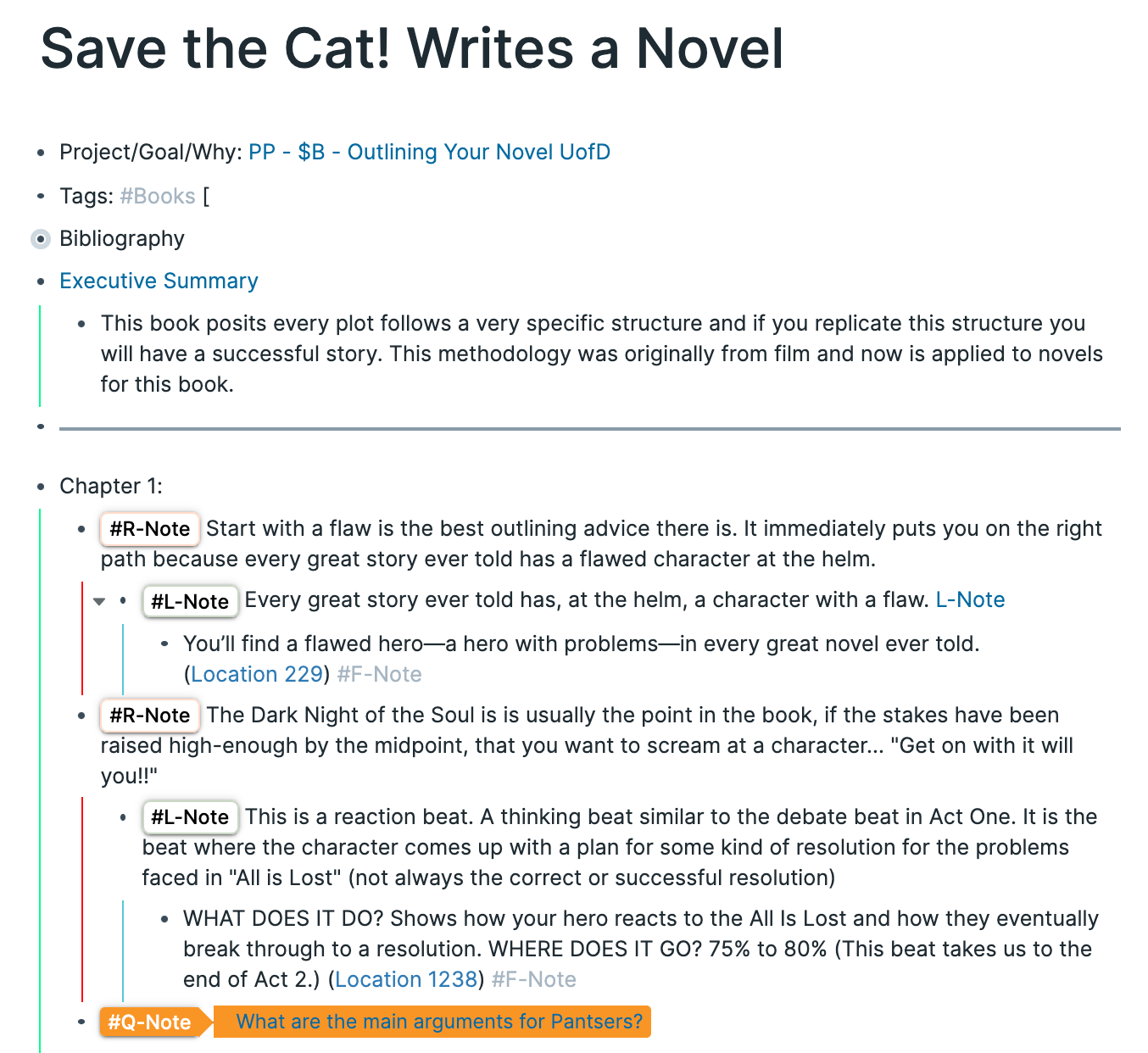
+ Nested under Page Backlink - Links Block and Page as a Linked Reference to another Page (Important) 嵌套在页面反向链接 - 链接块和作为另一个页面的链接引用(重要)
+ You are taking notes on a new source on your DNP and you nest notes underneath a source page link so you can relate your notes to the date. You will move important Blocks to On Page Blocks later #card
+ 你在DNP上为一个新来源做笔记时,会将笔记嵌套在来源页面链接下方,以便将笔记与日期关联。稍后你会将重要的区块移至“页面区块”中。
+ You are synthesizing Blocks on a Source Page and you realize you’d like to see many of them when reviewing a particular topic. You nest under a Topic Page Backlink #card
+ 你在源页面上合成多个区块时,突然想到在回顾特定主题时希望能同时看到它们。于是你将它们嵌套在主题页的反向链接下。
Page to Page Link #card
- Page mentions (no double bracket)- Links Block as an Unlinked Reference (Not Important) 页面提到(无双括号)- 链接块作为未链接的引用(不重要)
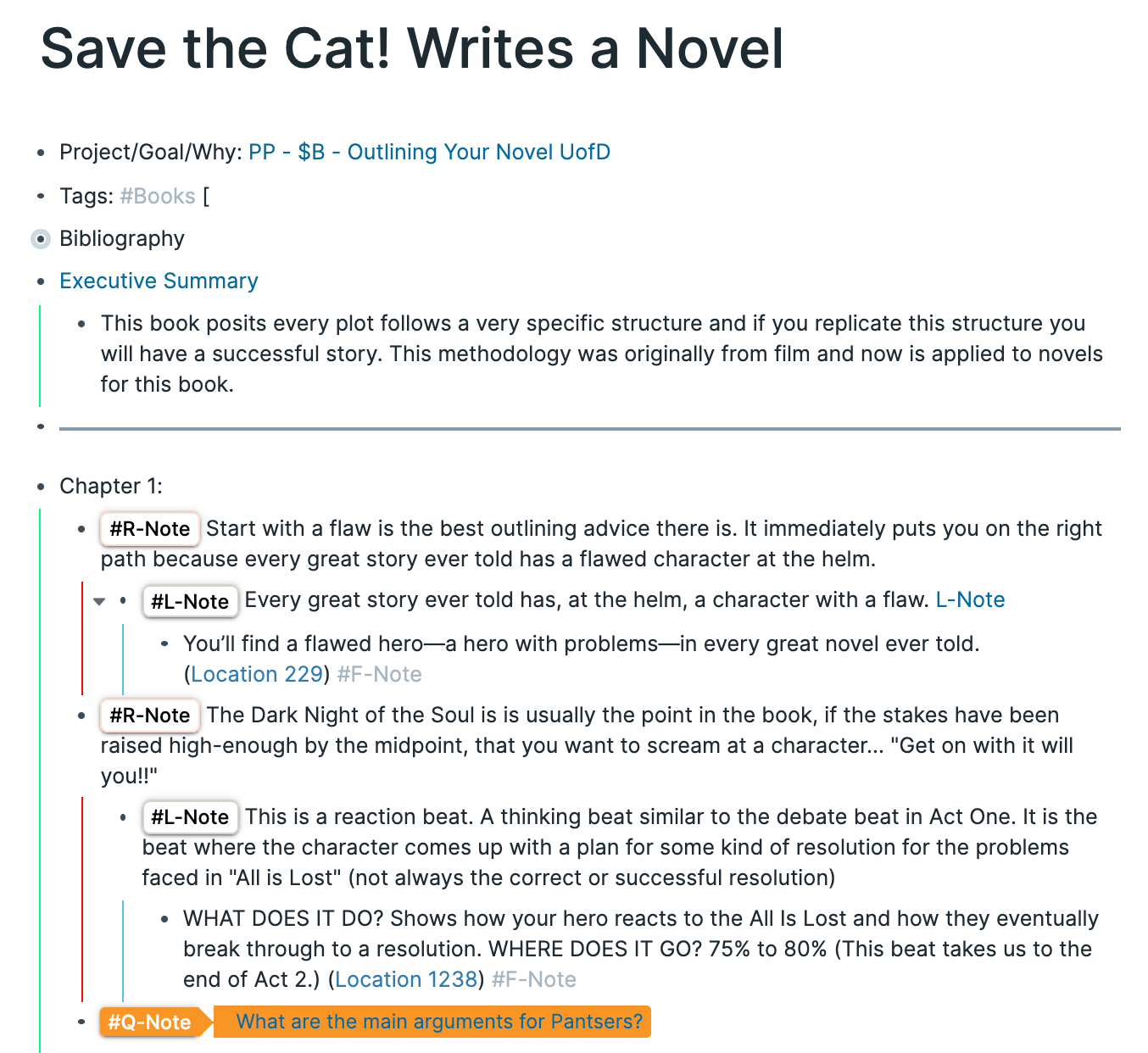
- 读书笔记:关于小说创作的结构关键点
- 概要(Executive Summary):书中提到的每个情节都遵循一种特定的结构,复制这种结构即可能写出成功的故事。最初这种方法来源于电影,现在被应用到小说中。
- 第1章:
- 建议从角色缺陷开始,因为每个伟大的故事都有一个有缺陷的角色。
- 提到“灵魂的黑暗之夜”是小说中的一个关键点,反映角色如何应对逆境并最终突破,通常在故事的75%-80%处。这是一个角色思考和制定解决方案的时刻。
+
Block to Block Connections #card
- Nesting (Very Important)
- Relationships
- Thought Process
- Tagging (Important)
- Serendipity (Less Important, but extremely powerful)
Lesson 8C - The Building BLOCKS (Pt 3)